

How to Find Your Competitor’s Customers: Step by Step Guide
Knowing your competitor's customer list is obviously a competitive advantage, so one of the most common requirements in any competitor analysis project is a list of the competitor’s existing customers, each of whom may be targeted as a potential customer. Sales targets can be harvested from the customer lists of direct competitors or indirect competitors. These can be found via primary fieldwork and secondary/public sources. Here we will show you how to use public sources to find your competitor’s customers – with an eye to winning those accounts and increasing market share.

Primary fieldwork
We can’t replicate primary fieldwork in this article. Primary research involves talking to people who might know some of the information. For example, people who work for your competition - particularly salespeople and business development managers - will know customers. Partners of the competitor - particularly resellers - will also know customers; partners may feature such customers on their own websites, but primary fieldwork with these partners can also uncover more names. Customers of the competitor may know about other customers. And so on. These are the kind of sources we might use for a real competitive analysis project.
Secondary sources
We have to choose an arbitrary “competitor” for this exercise in competitive intelligence, and we’re choosing Lattice, for no particular reason. They're going to be competition to somebody, of course. But you can replicate our research process for your key competitor of choice. Here are the secondary sources we’re going to cycle through as we try to understand which companies are in their customer base:
Case studies on the competitor’s website
Customer mentions elsewhere on the competitor’s website
Social media - YouTube
Social media - Twitter
Social media - Instagram
Wayback Machine
Code scraper sites
Customer list aggregators
LinkedIn
Product review sites
Sidequests: on the way, we will keep an eye out for other sources that we might not usually consider or that we come across by serendipity.

SUBSCRIBE TO OUR COMPETITIVE INTELLIGENCE NEWSLETTER
1. Case studies on the competitor’s website
This is the obvious first port of call - on their customers page, Lattice features a few dozen existing customers, each of which may be a good target customer for winning over.
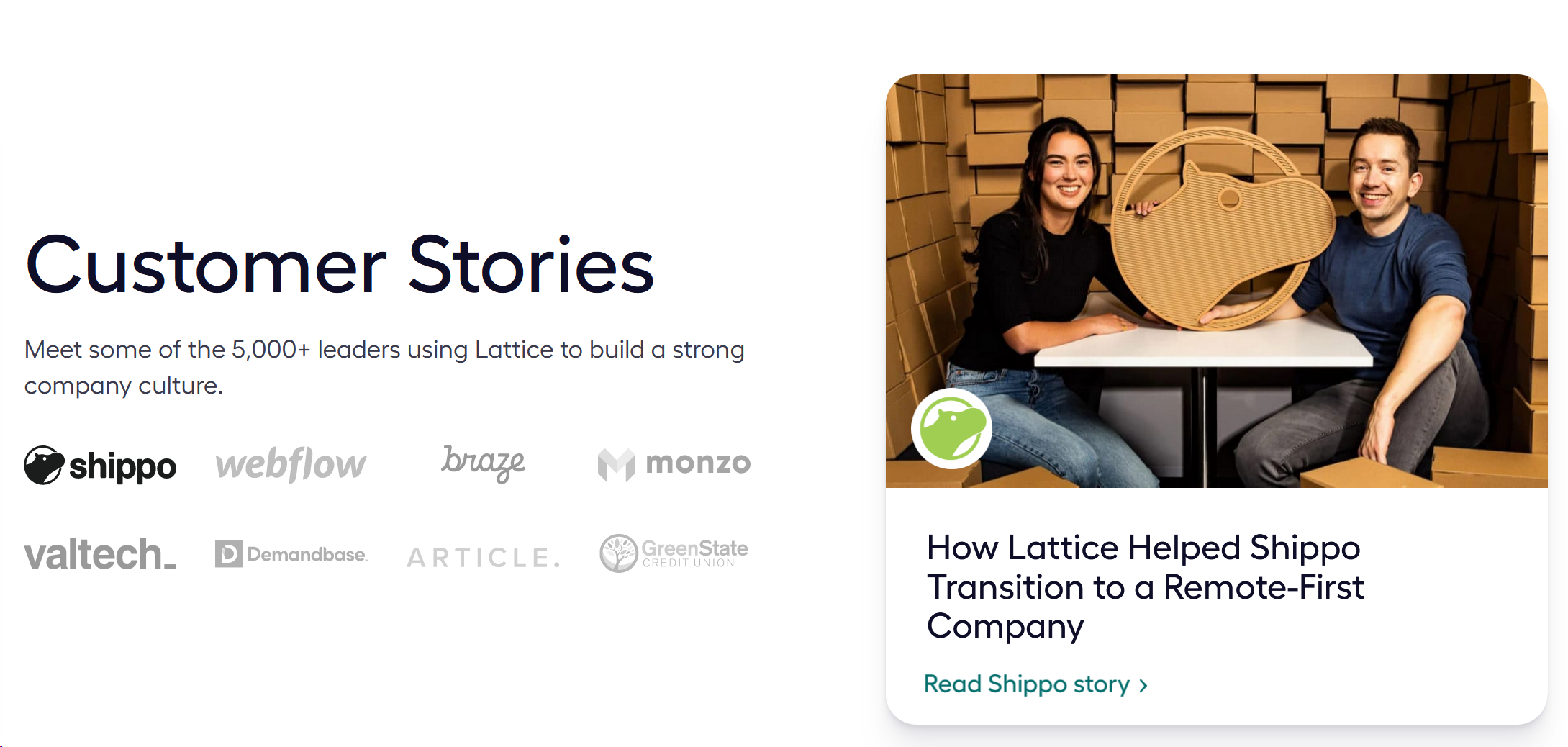
Customers: Stansell Electric Company, Klick Health, Olo, Agero, Muck Rack, Twill, Linktree, Campspot, Goldrich Kest, Strive Health, Shippo, GoGuardian, JustAnswer, Forge Biologics, Sensat, Million Dollar Baby, Onbe, GoodUnited, Liferay, mPulse, Trout, DECIEM, Green State Credit Union, Superside, AllTrails, ThriveDigital, Special Olympics, Wyze, Faire, SmugMug, Funeral Directors Life, Demandbase, Article, 3Q/DEPT, TopSpot, Future, Tide, OppFi, Parkhub, Nous, Solera, Monzo, Rainforest, Instapage, Li-Cycle, Webflow, Valtech, Third Bridge, TA Cook, Reddit, Qumu, Policygenius, Nava, Hub Australia, Guild Education, Coenterprise, Braze, Foster, Area 1.
2. Customer mentions elsewhere on the competitor’s website
Companies mention customers all over their website, and it’s an easy thing to check the main 20 or so pages. Just looking at Lattice’s homepage gives us another 11 customers. There may be more to be found elsewhere on lattice.com.
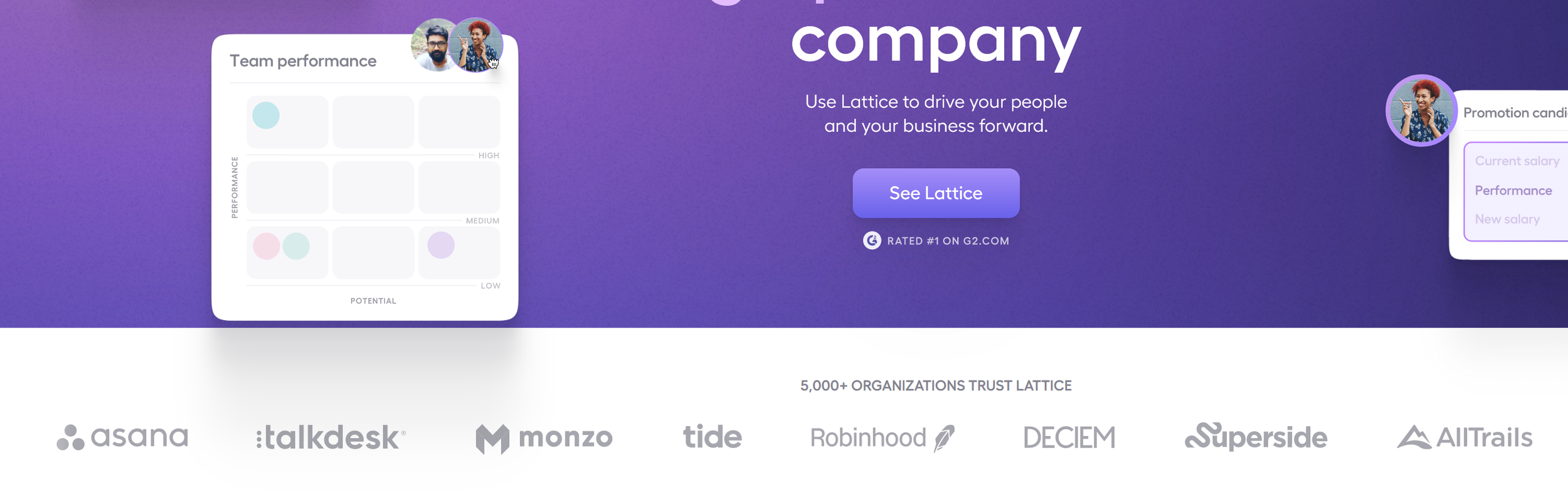
Customers: Robinhood, Gusto, Stamps.com, T2, Vention, Outset, Bombas, Slack, Asana, Talkdesk, Zeus Living.
3. Social media - YouTube
Companies sometimes have interviews with their customers, on YouTube. Lattice’s YouTube channel does feature interviews with several companies.

There are some good names featured. We will treat them as customers here but really, they should be checked rigorously. On the one hand, Lattice is more likely to feature customers than non-customers. Particularly if, like here, it is discussing best practices with these companies - it’s not a good look if the interviewee is a ‘best practitioner’ but doesn’t use your product, or uses a competing product. However, the interviews may instead be interviews with interesting practitioners, or with companies that Lattice hopes will become customers. Adobe, Apple, IBM and others on here are marquee names and it’s a little surprising they are not featured as customers on Lattice’s website, so we would need to investigate further. Not least by listening to the interviews (which we have not done).
Sidequest: the Warby Parker video leads to Lattice’s podcast, but this repeats the same interviews.
Customers: Adobe, Cotopaxi, Cuvva, Buffer, Costco, Vice, Envoy, Calm, Poppy Seed Health, IBM, Apple and others.
4. Social media - Twitter
Social media can be a useful source for market research, particularly anything focused on the competitor's marketing campaigns. Social media can also be easy to process with keyword search. Lattice’s Twitter channel calls out a few additional customers. Looking at a competitor's followers on Twitter can also be useful — some of these will be customers, although it is difficult to tell who, but followers in aggregate can provide valuable insight about who makes up the competitor's target audience.
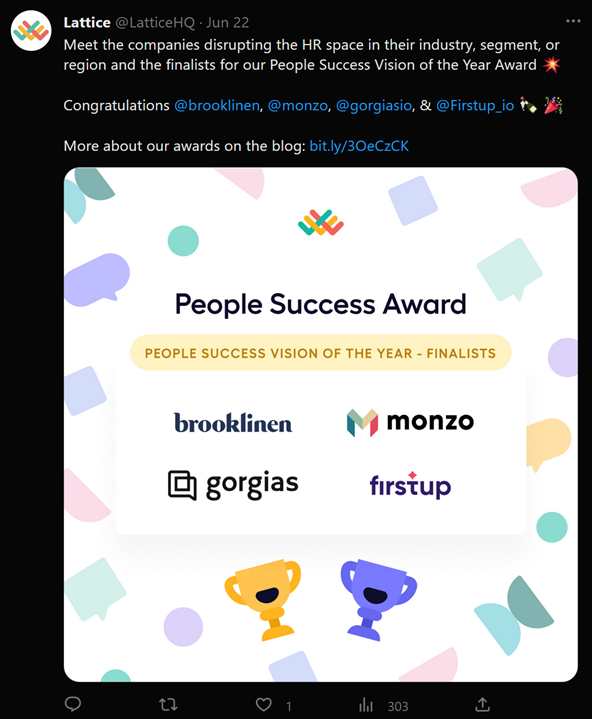
It also points to Lattice’s awards announcement, which includes additional customers.
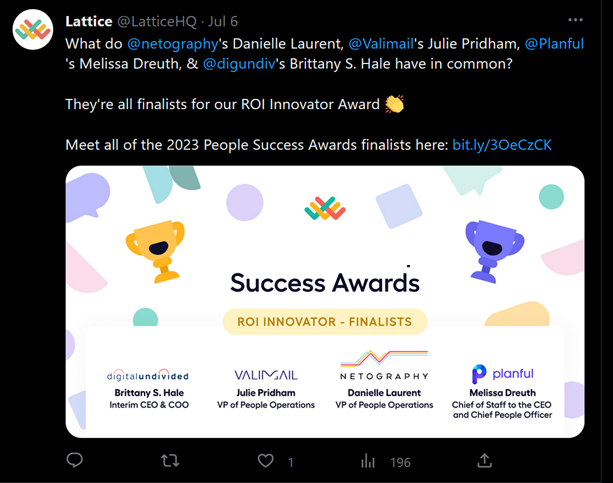
Customers: Appspace, Article, Blueocean.ai, Brooklinen, Choozle, Digitalundivided, Earnest, Equip Health, Ergatta, Firstup, Freshworks, Gorgias, Instructure, Jane App, Kulfi Collective, LogicGate, Loopio, Netography, PAR Technology, Planful, Runway, Sevenrooms, Smallpdf, Submittable, Tinuiti, Trulioo, Valimail, Vert.
Sidequest: knowing that these awards exist leads us to search for the previous year’s awards, which returns a few more customers.
Customers: Berlin Rosen, Spot Hero, ThredUp, JD Slaughter.
5. Social media - Instagram
Like other social media channels, Instagram can be useful not just for customer lists, but for understanding the competitor's digital marketing strategy more broadly. Lattice’s Instagram channel features a few more customers.
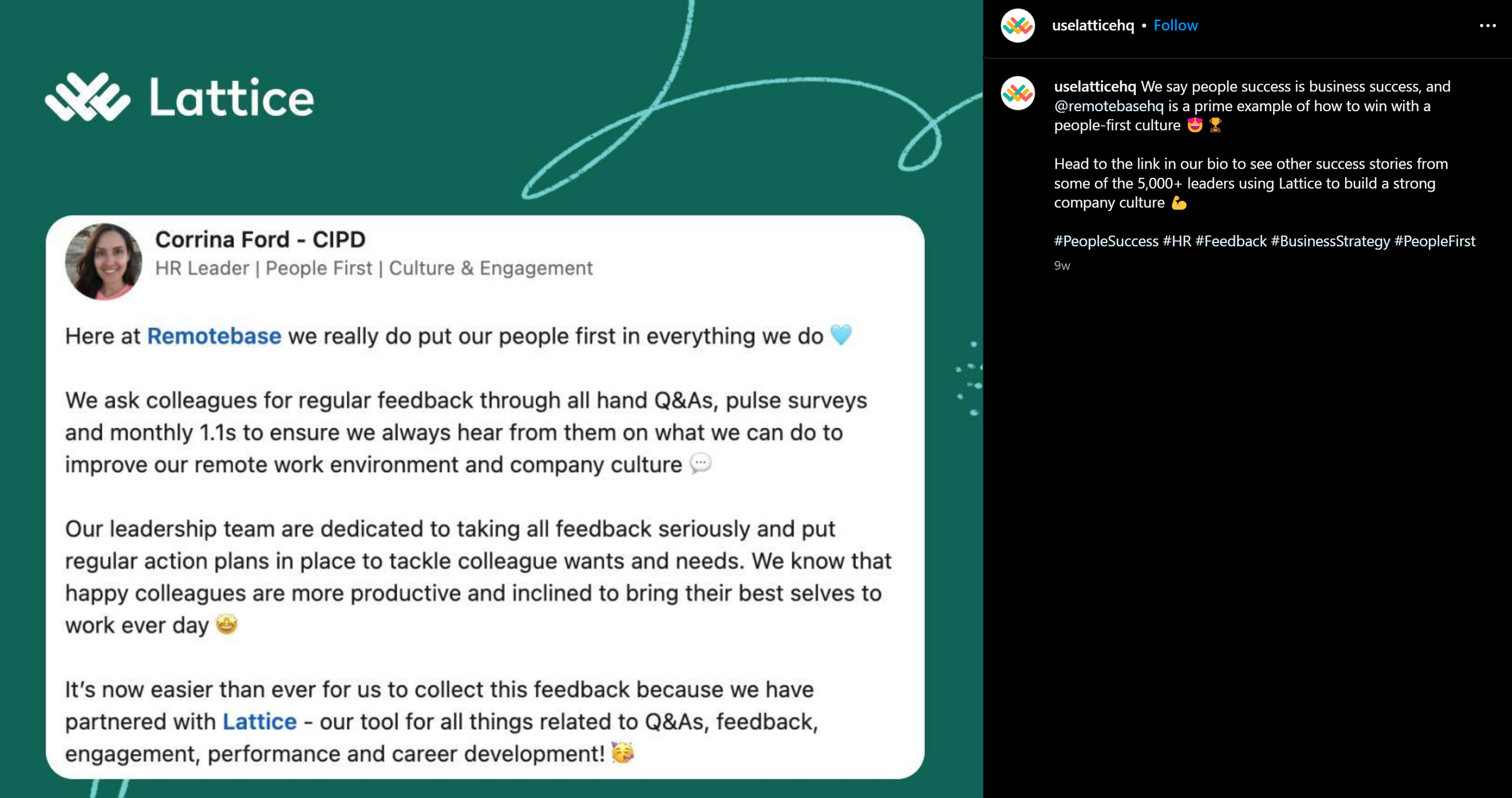
Sidequest: Lattice’s Instagram mentions something called Resources for Humans, a community that it has created for HR professionals. RfH has a public Slack channel, a LinkedIn page and other communities featuring thousands of HR professionals from many companies. RfH is not limited to Lattice customers, but many of these are bound to be Lattice customers (one might guess the majority of Lattice customers might be members) and in a real competitive intelligence project, would merit further investigation.
Customers: Forrest Co, Remotebase, Torchbox, SingleOps, Tray.io.
6. Wayback Machine
Wayback Machine is an excellent resource for competitive research. In this case, we will limit ourselves to checking older versions of lattice.com/customers. There is a risk with Wayback Machine, particularly if one goes too far back, that some of the companies found will no longer be customers, but on the whole, it is one of the most useful competitor analysis tools.
From a couple of years ago (for example), we find LegalZoom, Turo, Button, Cruise, Teaching Trust, Marvin Powers, Clio, Insight Data Science, Wyzant. We also see customer logos without names attached. It is not difficult to track down who the logos belong to, but one trick in particular is to right click and ‘save as’ and see if the filename given to the logo image by Lattice shows the customer name. Doing that gives us an additional customer, Braze.
Sidequest: another reason why Wayback Machine is interesting for competitive research is that it can reveal which customers were added each year, pointing to wins and possible renewal years. Companies also often say how many customers they have and if Wayback Machine captures that number regularly, it can be used to track the competitor’s customer growth.
Customers: LegalZoom, Turo, Button, Cruise, Teaching Trust, Marvin Powers, Clio, Insight Data Science, Wyzant, Braze.
7. Code scraper sites
There are many code scraper sites that are useful for competitive analysis because they show what technology a website uses. We often use multiple such competitor analysis tools per project, with BuiltWith being our first port of call. In this case, however, they can’t help us, presumably because Lattice does not surface on companies’ external sites. Some HR tools do, but not Lattice.
8. Customer list aggregators
Customer list aggregators collect names much as we have done above e.g. from companies’ case studies pages, or social media or other sources. They are a great source for competitor research. Because of this, the customers listed will often be the same as the ones found already above. We will look at one, FeaturedCustomers, but there are a few that should be checked in a real project. In this case, although FeaturedCustomers is replicating our earlier searches, there is a small number of additional names, perhaps because FeaturedCustomers scraped lattice.com on an earlier date.

Customers: Glossier, Cramer, UserTesting, Fueled, Knotel.
9. LinkedIn
LinkedIn is a stalwart of competitor research. Sometimes, the LinkedIn profiles of salespeople will list names of accounts that they manage. More recently, this has become less common - presumably companies have told their employees not to share such information. For Lattice, we find a reference to older, boilerplate text that lets us add a couple more customers.

Additionally, it is possible to use third party tools that scrape the contacts of profiles (in this case, salespeople’s contacts) in the hope that such contacts work at that person’s accounts, but in practice this is a very hit-and-miss approach and not worth the effort.
Sidequest: reading LinkedIn profiles is essential in competitor analysis anyway, and for salespeople can reveal data about sales team structure, headcount, account segmentation, quotas, accounts per salesperson, revenues and growth.
Customers: Coinbase, PlanGrid, WePay, Birchbox.
10. Product review sites
Review sites allow individuals to post accounts of their customer experience with the competitors' products, discussing everything from customer service to product features. These customer reviews make for excellent reading of their own, but here we are more interested in whether they can lead us to competitors' customers. Product review sites sometimes include photos of reviewers alongside their customer feedback posts, and other information (e.g. industry, size of company, etc.). It is difficult, but not impossible to use such details and identify the companies that these reviewers work for (which are customers of the company in which we are interested). Let’s take an example from Lattice reviews on SoftwareAdvice.

Here, we can reverse image search the photo, which leads us to this page, identifying the photo as a Wyze employee.

However, we already found Wyze above. A different example is this from G2.

Reverse image search us leads to Tinuiti, but we have already found that customer too.

This is a slow process, but iterating through this method may uncover a few additional customers.
Summary
And so, we have found 132 customers.
Case studies on the competitor’s website … 59 customers, each of which could be a potential customer for your sales efforts.
Customer mentions elsewhere on the competitor’s website … 11 customers.
Social media - YouTube … 11 customers.
Social media - Twitter … 32 customers.
Social media - Instagram … 5 customers.
Wayback Machine … 10 customers.
Code scraper sites … 0 customers.
Customer list aggregators … 5 customers.
LinkedIn … 4 customers.
Product review sites … 0 customers.
Customers: Stansell Electric Company, Klick Health, Olo, Agero, Muck Rack, Twill, Linktree, Campspot, Goldrich Kest, Strive Health, Shippo, GoGuardian, JustAnswer, Fo rge Biologics, Sensat, Million Dollar Baby, Onbe, GoodUnited, Liferay, mPulse, Trout, DECIEM, Green State Credit Union, Superside, AllTrails, ThriveDigital, Special Olympics, Wyze, Faire, SmugMug, Funeral Directors Life, Demandbase, Article, 3Q/DEPT, TopSpot, Future, Tide, OppFi, Parkhub, Nous, Solera, Monzo, Rainforest, Instapage, Li-Cycle, Webflow, Valtech, Third Bridge, TA Cook, Reddit, Qumu, Policygenius, Nava, Hub Australia, Guild Education, Coenterprise, Braze, Foster, Area 1, Robinhood, Gusto, Stamps.com, T2, Vention, Outset, Bombas, Slack, Asana, Talkdesk, Zeus Living, Adobe, Cotopaxi, Cuvva, Buffer, Costco, Vice, Envoy, Calm, Poppy Seed Health, IBM, Apple, Appspace, Article, Blueocean.ai, Brooklinen, Choozle, Digitalundivided, Earnest, Equip Health, Ergatta, Firstup, Freshworks, Gorgias, Instructure, Jane App, Kulfi Collective, LogicGate, Loopio, Netography, PAR Technology, Planful, Runway, Sevenrooms, Smallpdf, Submittable, Tinuiti, Trulioo, Valimail, Vert, Berlin Rosen, Spot Hero, ThredUp, JD Slaughter, Forrest Co, Remotebase, Torchbox, SingleOps, Tray.io, LegalZoom, Turo, Button, Cruise, Teaching Trust, Marvin Powers, Clio, Insight Data Science, Wyzant, Braze, Glossier, Cramer, UserTesting, Fueled, Knotel, Coinbase, PlanGrid, WePay, Birchbox.
There are more sources one could use. For example, we also recommend a basic Google search - you might be surprised what you find scrolling through the first few pages of search results. Scouring the competitive landscape for customers that your own sales team can target is an important part of competitive intelligence. Knowing what companies make up the customer base of a key competitor is a useful competitive advantage.