Competitive intelligence in B2B SaaS: Q2 2026 survey
The results are in for our first survey of competitive intelligence practices in B2B SaaS.
Respondents came from US B2B SaaS firms of all sizes, in product marketing as well as pure competitive intelligence, so it’s no surprise that they use competitive intelligence for sales enablement, competitor tracking and pricing/packaging research.
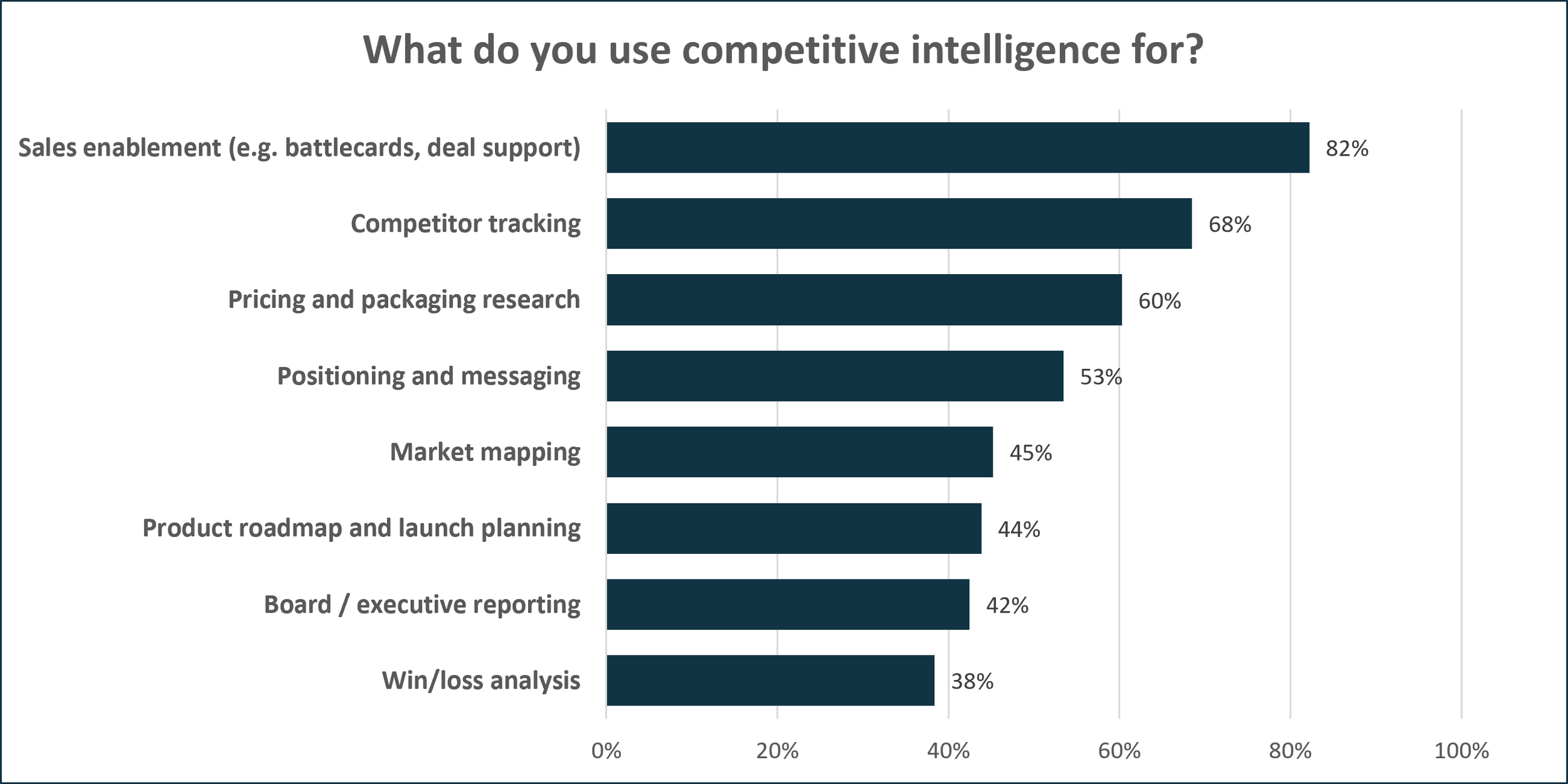
When asked “What do you use competitive intelligence for?”, 82% said sales enablement, 68% said competitor tracking, 60% said pricing and packaging research, 53% said positioning and messaging, 45% said market mapping, 44% said product roadmap and launch planning, 42% said board / executive reporting, and 38% said win/loss analysis.
Competitive intelligence professionals use a wide range of sources, as one would expect from people who thrive on in-depth research. ‘Only’ 60% of respondents use their own primary sales intelligence, and a perhaps surprisingly high percentage of people use dedicated competitive intelligence software.
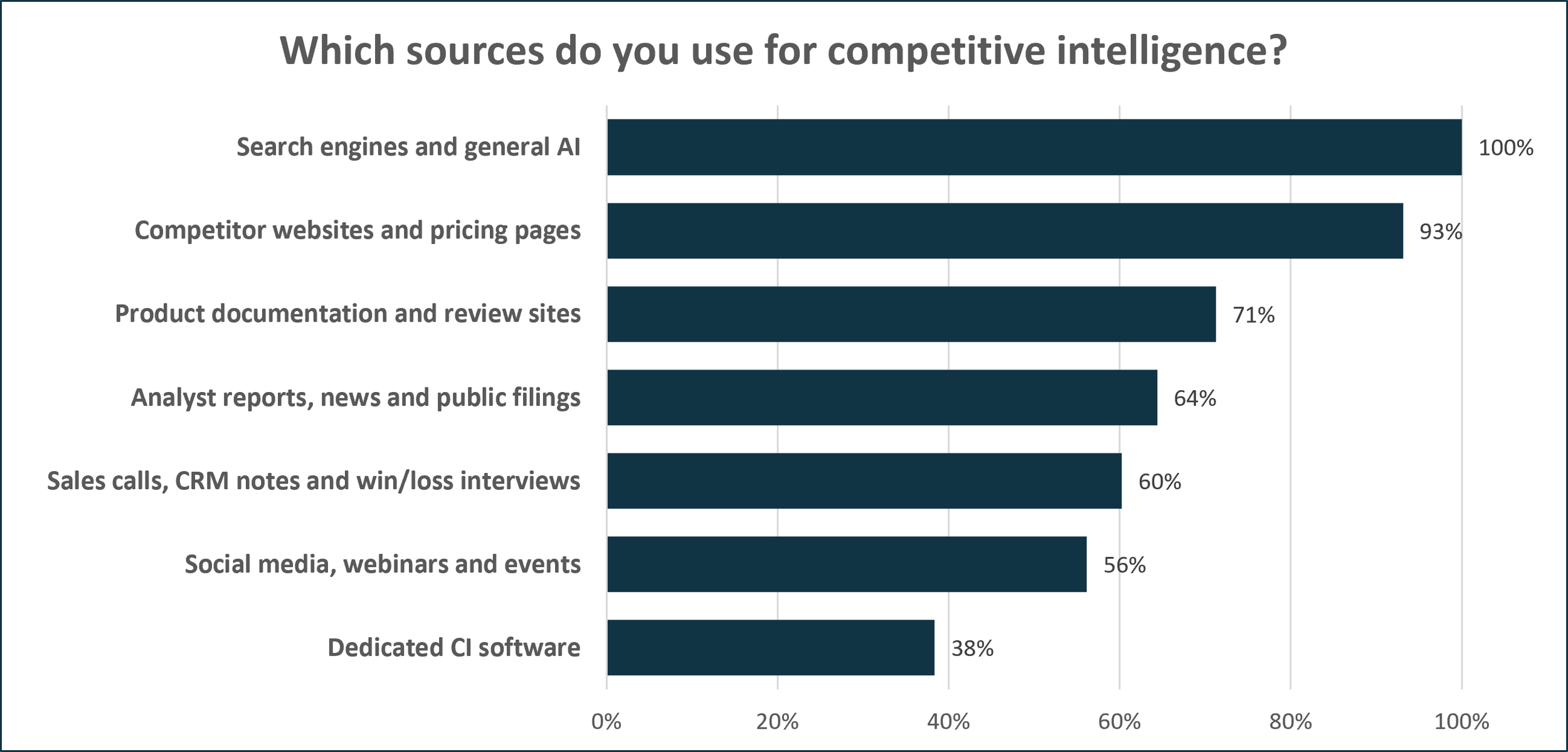
When asked “Which sources do you use for competitive intelligence?”, 100% said search engines and general AI, 93% said competitor websites and pricing pages, 71% said product documentation and review sites, 64% said analyst reports, news and public filings, 60% said sales calls, CRM notes and win/loss interviews, 56% said social media, webinars and events, and 38% said dedicated CI software.
The biggest frustrations with CI processes, are that too much of it is manual, and it is difficult to keep research up to date - those two may well be linked. Having to update research manually, every month or however often, is tedious.
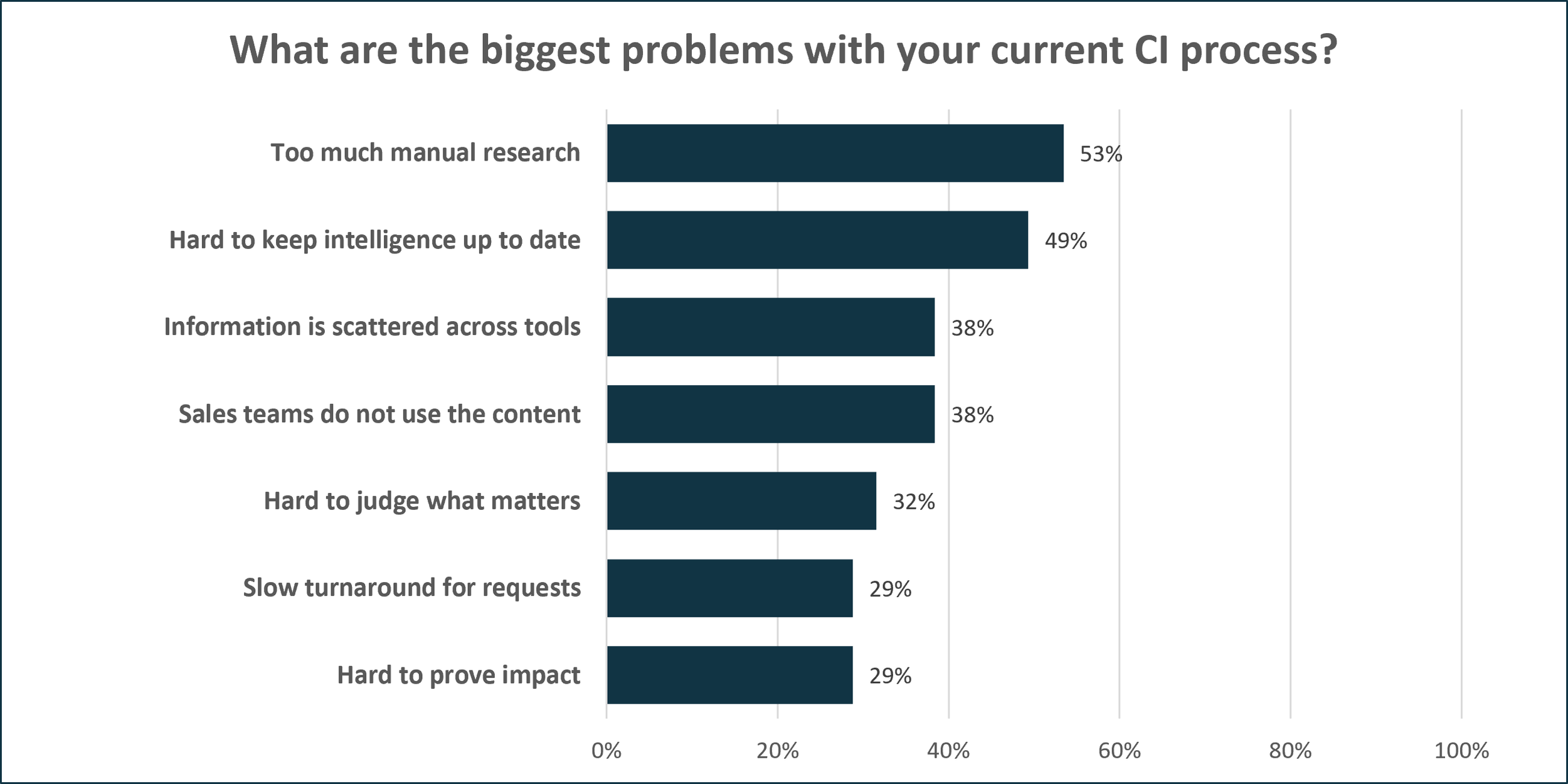
When asked “What are the biggest problems with your current CI process?”, 53% said too much manual research, 49% said hard to keep intelligence up to date, 38% said information is scattered across tools, 38% said sales teams do not use the content, 32% said hard to judge what matters, 29% said slow turnaround for requests, and 29% said hard to prove impact.
Respondents were screened for AI use, so it’s not surprising that everyone here is using AI, but a greater number than we expected are using AI in their sales and research applications.
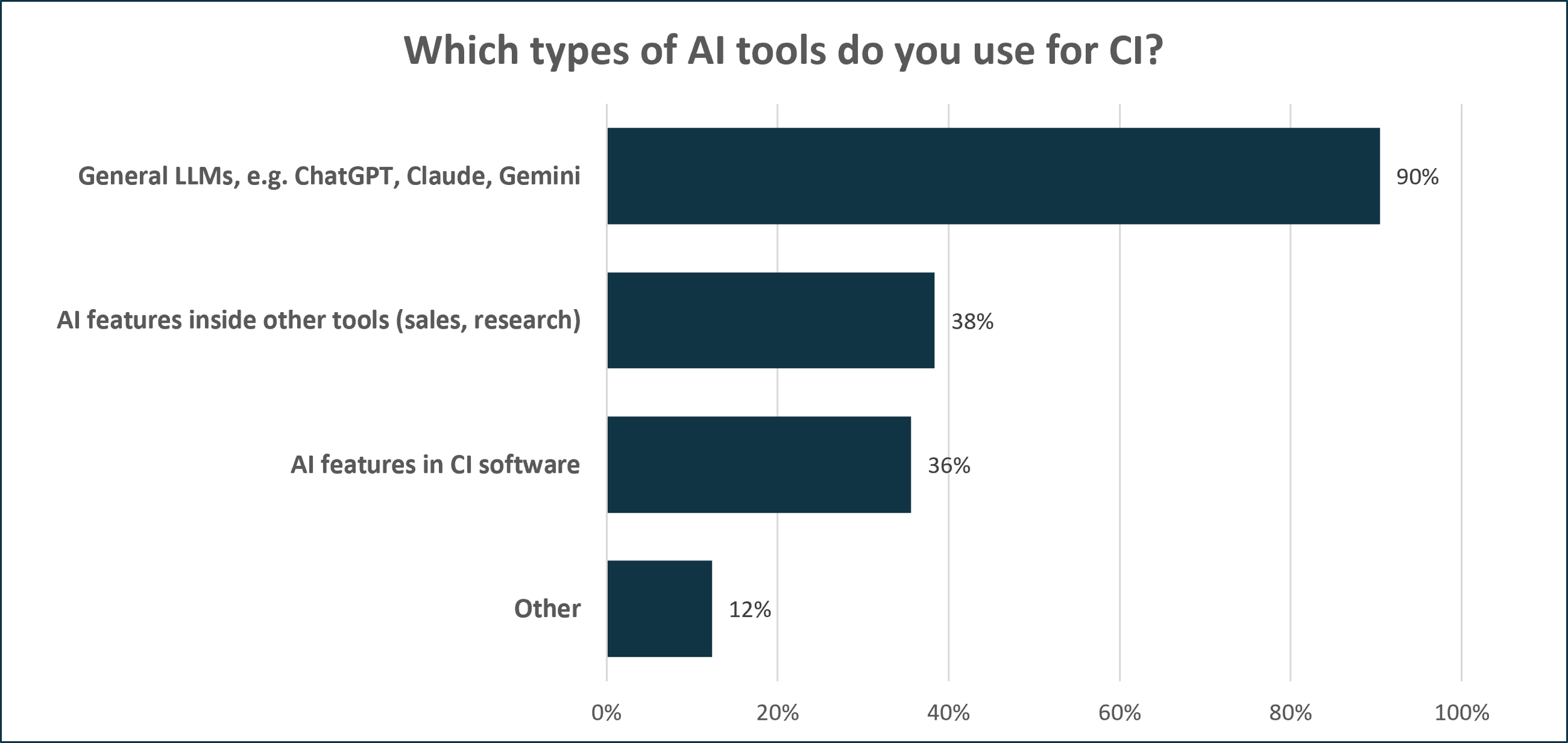
When asked “Which types of AI tools do you use for CI?”, 90% said general LLMs, 38% said AI features inside other tools, 36% said AI features in CI software, and 12% said other.
AI is used for a range of use cases, mostly at the start of the process, rather than to create final deliverables. That aligns with the fact that LLMs are better at research and distillation than they are at battlecards and slide decks.
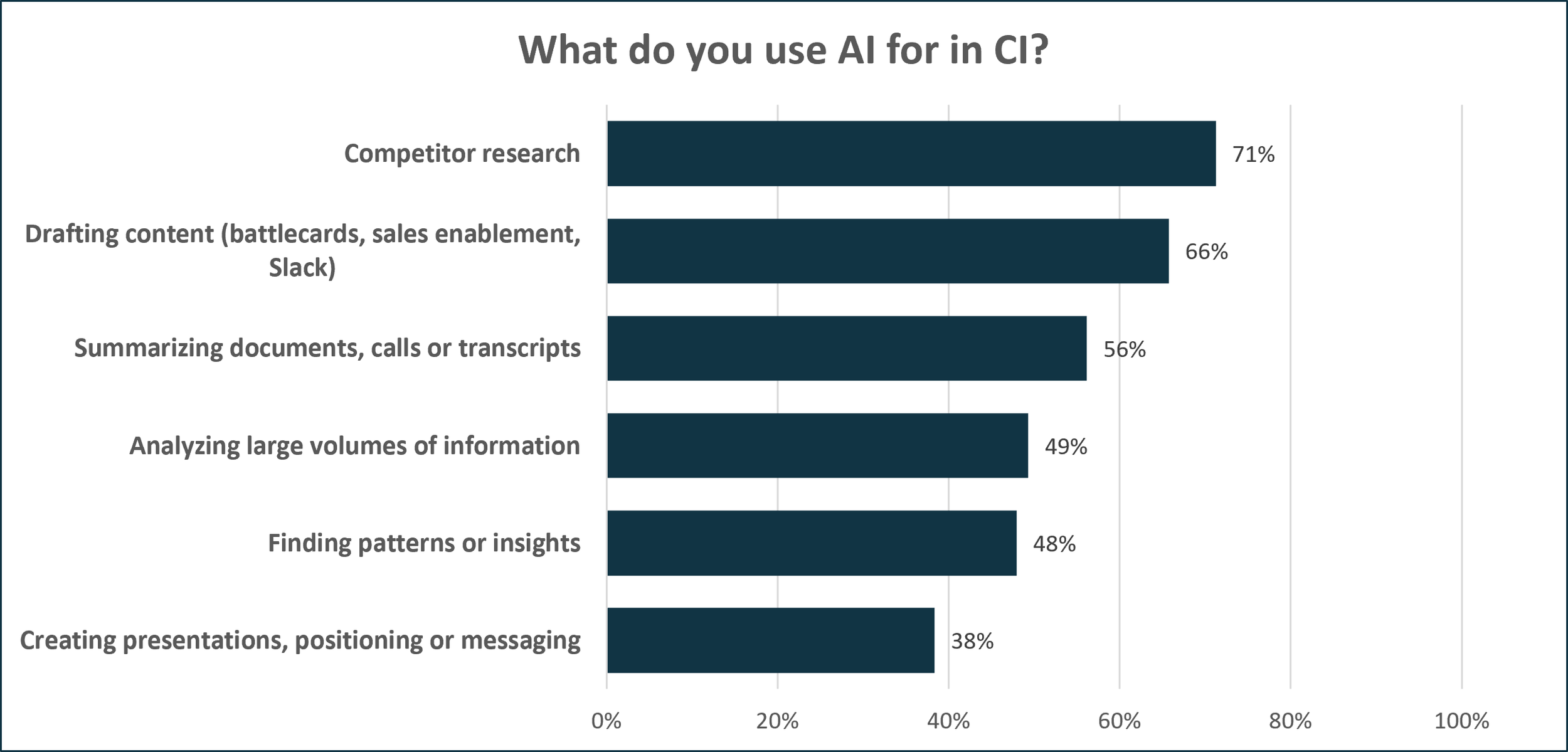
When asked “What do you use AI for in CI?”, 71% said competitor research, 66% said drafting content, 56% said summarizing documents, calls or transcripts, 49% said analyzing large volumes of information, 48% said finding patterns or insights, and 38% said creating presentations, positioning or messaging.
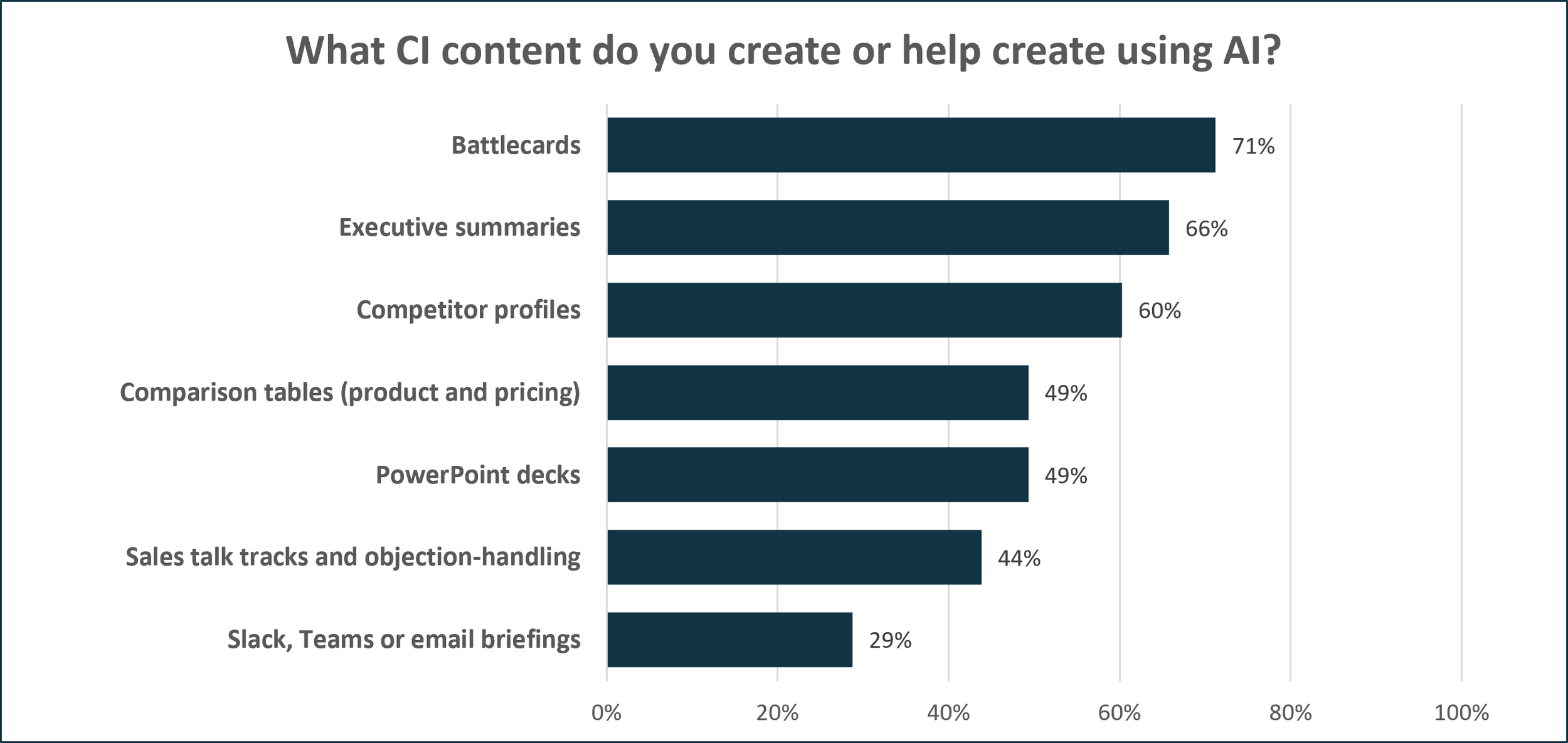
When asked “What CI content do you create or help create using AI?”, 71% said battlecards, 66% said executive summaries, 60% said competitor profiles, 49% said comparison tables, 49% said PowerPoint decks, 44% said sales talk tracks and objection-handling, and 29% said Slack, Teams or email briefings.
The main benefit of AI? Speed. About one third of respondents said AI helped them improve the quality of their work, but mostly, competitive intelligence professionals are working faster.
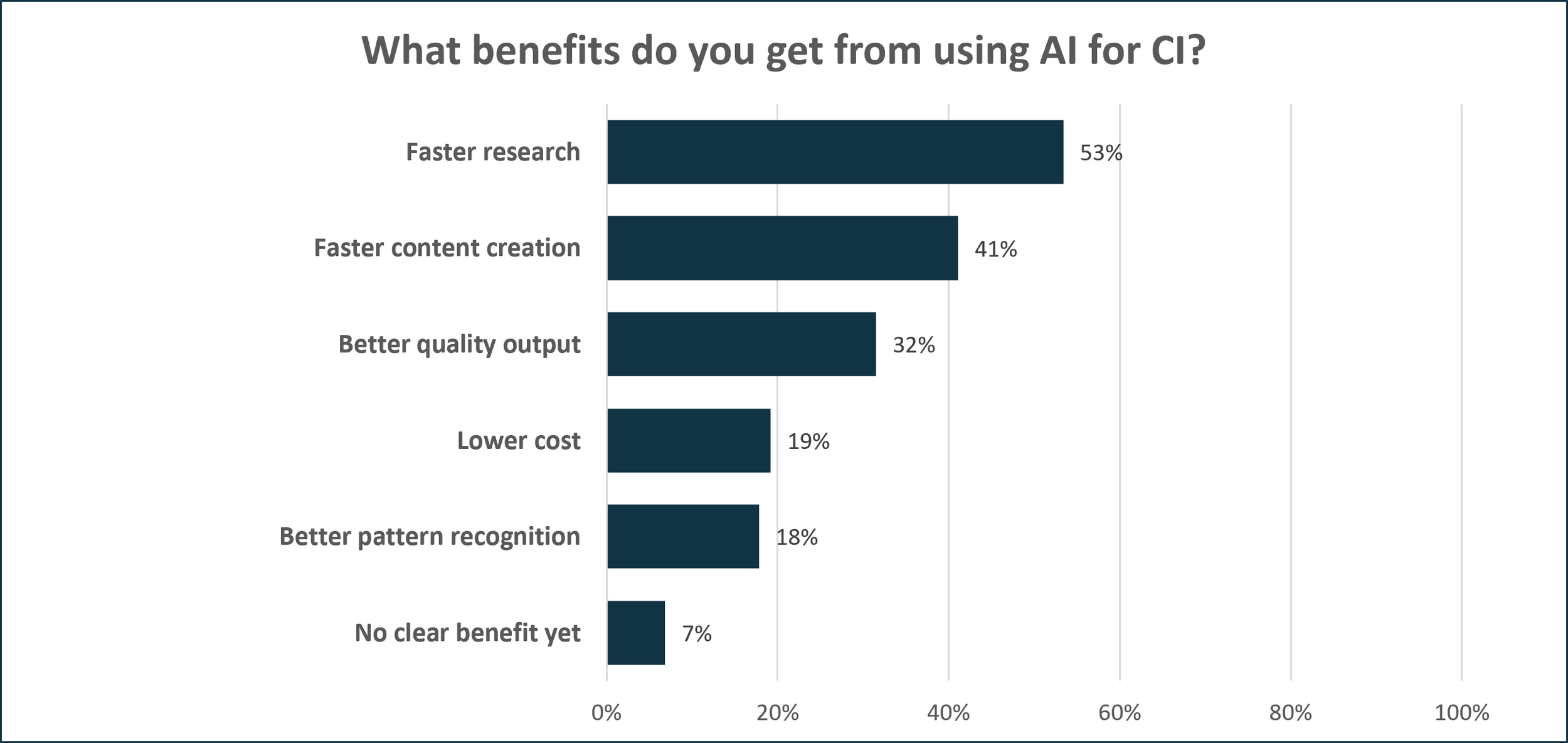
When asked “What benefits do you get from using AI for CI?”, 53% said faster research, 41% said faster content creation, 32% said better quality output, 19% said lower cost, 18% said better pattern recognition, and 7% said no clear benefit yet.
Only eight per cent of competitive intelligence professionals use AI output as-is. Our guess is that this eight per cent still checks what AI produces, even if only in the copy/pasting transition, or that it’s basic output. One third of competitive intelligence professionals check everything.
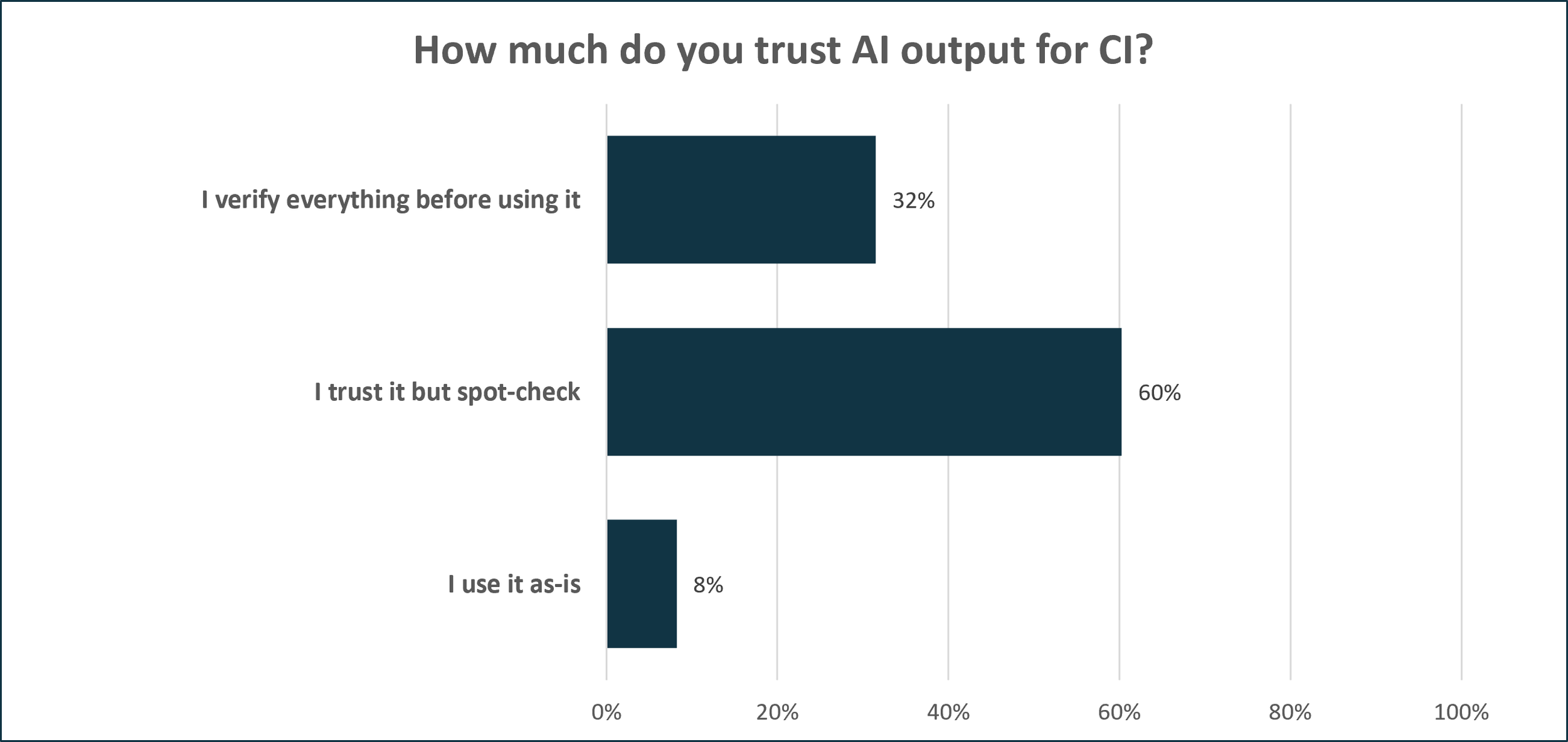
When asked “How much do you trust AI output for CI?”, 32% said they verify everything before using it, 60% said they trust it but spot-check, and 8% said they use it as-is.
The biggest frustrations with AI are poor accuracy, missing citations and the difficulty of connecting it to internal data. Confidentiality is a comparatively minor concern.
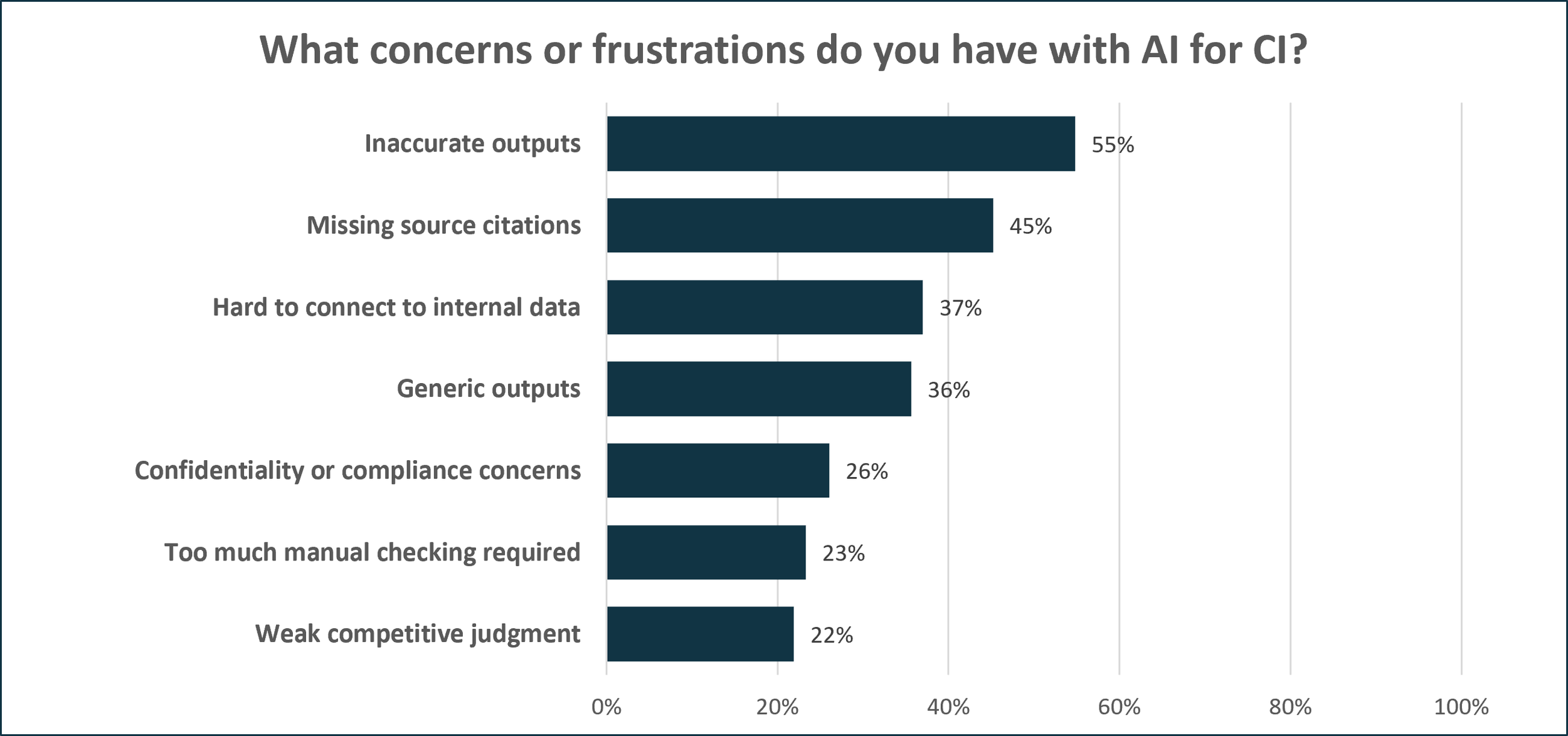
When asked “What concerns or frustrations do you have with AI for CI?”, 55% said inaccurate outputs, 45% said missing source citations, 37% said hard to connect to internal data, 36% said generic outputs, 26% said confidentiality or compliance concerns, 23% said too much manual checking required, and 22% said weak competitive judgment.